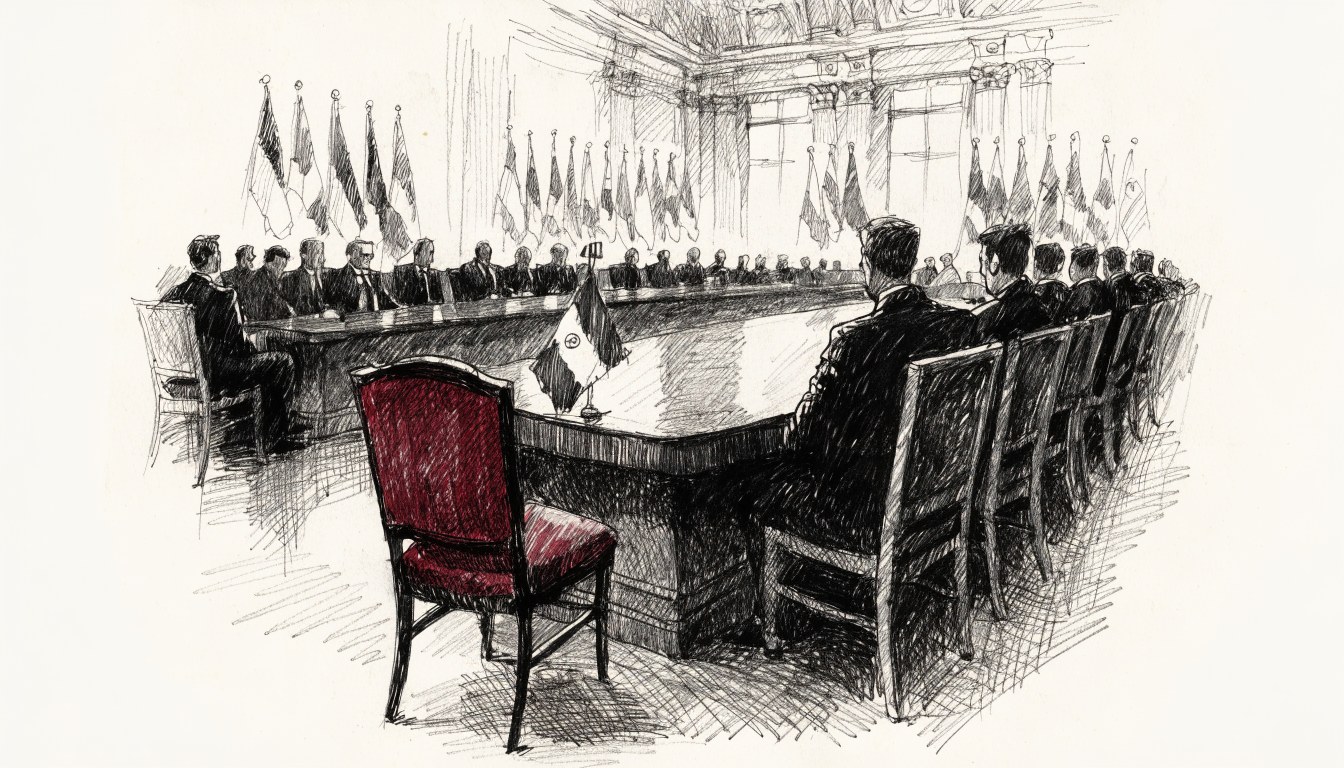
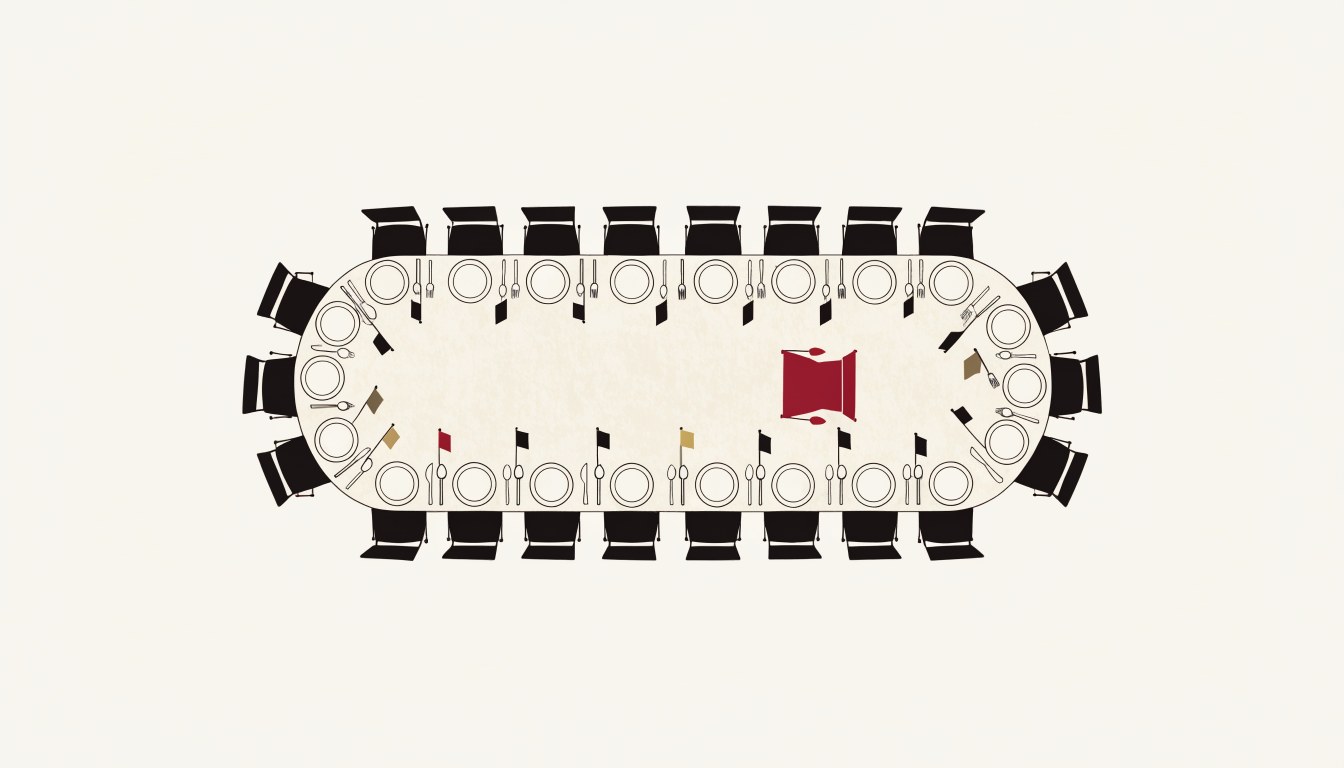
Hay sillas que dicen más vacías que llenas. Hoy, en Washington, sesenta países toman asiento en una cumbre convocada por el secretario de Estado Marco Rubio para rediseñar la arquitectura de seguridad del continente frente a las nuevas amenazas transnacionales. Están los europeos, los asiáticos, casi todo el hemisferio. Hay una silla que nadie ocupa, y no porque el invitado no llegó: porque no fue invitado. Esa silla tiene nombre. Se llama México. Y su vacío, hoy, comunica más que cualquier discurso que se pronuncie en el salón.
No invitar a México a una cumbre de seguridad hemisférica no es un olvido protocolar. Es la conclusión operativa de una premisa que en Washington ya se dice en voz alta y que el senador Teruel formuló sin eufemismos: en México, narco y gobierno han dejado de ser cosas distintas. Cuando un Estado es percibido no como socio contra el crimen sino como parte del problema, no se le sienta en la mesa donde se diseña la respuesta. Se le estudia desde la mesa. La ausencia de México no es un desaire: es un diagnóstico clínico, y hay que tener el valor de leerlo como lo que es.
There are chairs that say more empty than full. Today, in Washington, sixty countries take their seats at a summit convened by Secretary of State Marco Rubio to redesign the continent's security architecture against the new transnational threats. The Europeans are there, the Asians, nearly the whole hemisphere. There is one chair no one occupies — not because the guest failed to arrive, but because the guest was not invited. That chair has a name. It is called Mexico. And its emptiness, today, communicates more than any speech delivered in the room.
Not inviting Mexico to a hemispheric security summit is not a protocol oversight. It is the operational conclusion of a premise now spoken aloud in Washington, one Senator Teruel put without euphemism: in Mexico, the cartels and the government have ceased to be different things. When a state is perceived not as a partner against crime but as part of the problem, it is not seated at the table where the response is designed. It is studied from the table. Mexico's absence is not a snub: it is a clinical diagnosis, and one must have the courage to read it for what it is.
El marco oficial, y el marco real
Seamos precisos con lo que la cumbre dice ser, antes de leer lo que significa. En su marco declarado, la reunión que Marco Rubio convoca este 15 de julio en Washington es una cumbre antiterrorista contra lo que el Departamento de Estado describe como el resurgimiento de un extremismo político transnacional, en particular las redes violentas de extrema izquierda — movimientos anarquistas y estructuras que la administración vincula a Antifa. Reúne a ministros y altos funcionarios de Europa, Asia y el hemisferio occidental para coordinar inteligencia y cooperación policial. En palabras de un funcionario del Departamento de Estado, su sistema operativo antiterrorista "necesita una actualización para lidiar con la realidad de estas amenazas".
El detonante no es retórico. El mes pasado, el Departamento de Justicia anunció condenas de hasta cien años de prisión contra miembros de lo que los fiscales llamaron una "célula de Antifa del norte de Texas", por un ataque coordinado el 4 de julio de 2025 contra el centro de detención migratoria de Prairieland, en Alvarado, Texas: llegaron con armas de fuego, explosivos y chalecos antibalas, lanzaron pirotecnia contra las instalaciones y dispararon contra los oficiales que respondieron; un policía recibió un disparo en el cuello. Los fiscales describieron planeación, comunicaciones cifradas y reconocimiento previo — la gramática de la violencia organizada, no de la protesta espontánea. Sobre esa base construye Washington su nueva doctrina. Y conviene decir que el propio marco tiene críticos: diplomáticos europeos han cuestionado por qué fueron invitados, señalando que el terrorismo de izquierda no figura como amenaza mayor en sus países, y algunos expertos advierten que ampliar las competencias antiterroristas podría terminar aplicándose contra el activismo político interno.
Aquí es donde el analista debe separar el marco del significado. El marco oficial es el terrorismo de extrema izquierda; el marco real es la reorganización del hemisferio. No son incompatibles: son la misma operación vista a dos alturas. Porque para América Latina, la categoría de "extremismo violento transnacional" no se llena de anarquistas encapuchados, sino de algo mucho más concreto — los cárteles designados como terroristas, las estructuras financieras que los lavan, y las redes políticas que los cobijan. Lo que en Texas es una célula, en el hemisferio es un sistema. Y una vez que existe la arquitectura legal para perseguir "violencia política organizada con vínculos transnacionales", esa arquitectura sirve para todo lo demás que Washington quiere reordenar. El marco antiterrorista es la puerta. Lo que hay del otro lado es un continente.
The official frame, and the real one
Let us be precise about what the summit says it is, before reading what it means. In its declared frame, the meeting Marco Rubio convenes this July 15 in Washington is a counterterrorism summit against what the State Department describes as a resurgence of transnational political extremism, particularly violent far-left networks — anarchist movements and structures the administration links to Antifa. It gathers ministers and senior officials from Europe, Asia, and the Western Hemisphere to coordinate intelligence and law-enforcement cooperation. In the words of a State Department official, its counterterrorism operating system "needs an update to deal with the reality of such threats."
The trigger is not rhetorical. Last month, the Justice Department announced sentences of up to a hundred years in prison against members of what prosecutors called a "North Texas Antifa cell," for a coordinated July 4, 2025 attack on the Prairieland migrant detention center in Alvarado, Texas: they arrived with firearms, explosives, and body armor, launched fireworks at the facility, and opened fire on responding officers; one policeman was shot in the neck. Prosecutors described planning, encrypted communications, and prior reconnaissance — the grammar of organized violence, not spontaneous protest. On that basis Washington builds its new doctrine. And it is worth saying the frame has its critics: European diplomats have questioned why they were invited, noting that left-wing terrorism does not rank as a major threat in their countries, and some experts warn that expanding counterterrorism powers could end up applied against domestic political activism.
Here is where the analyst must separate the frame from the meaning. The official frame is far-left terrorism; the real frame is the reorganization of the hemisphere. They are not incompatible: they are the same operation seen at two altitudes. Because for Latin America, the category of "transnational violent extremism" is filled not with hooded anarchists but with something far more concrete — the cartels designated as terrorist, the financial structures that launder them, and the political networks that shelter them. What in Texas is a cell, in the hemisphere is a system. And once the legal architecture exists to pursue "organized political violence with transnational links," that architecture serves everything else Washington wants to reorder. The counterterrorism frame is the door. What lies on the other side is a continent.
Cómo se alinean los países
Conviene alejar la cámara, porque esto no se entiende sin historia. Desde que existen los Estados, sobrevivir ha dependido menos de la fuerza propia que de la elección de con quién alinearse. Los países pequeños que prosperaron no fueron los más ricos en recursos, sino los que leyeron a tiempo hacia dónde soplaba el poder y se colocaron a favor del viento. Alinearse no es rendirse: es elegir el andamio sobre el cual construir. La tragedia de América Latina ha sido, una y otra vez, elegir el andamio equivocado — o peor, presumir de no elegir ninguno mientras el edificio se levantaba sin nosotros.
México lo hizo de manera dramática en los años setenta. Bajo Luis Echeverría, y en nombre de una tercera vía, México coqueteó con el Movimiento de Países No Alineados y con un tercermundismo retórico que sonaba digno y resultó costoso: nos colocó ideológicamente lejos del bloque que definiría la prosperidad de la segunda mitad del siglo. Mientras el sudeste asiático se pegaba pragmáticamente a las cadenas de valor de Occidente y despegaba, nosotros dábamos discursos sobre soberanía y dependencia. La historia fue implacable con esa elección: quienes se alinearon con el desarrollo, se desarrollaron; quienes se alinearon con la retórica, se quedaron con la retórica. El No Alineamiento fue una postura noble para dar discursos y una posición pésima para construir un país.
How countries align
It helps to pull the camera back, because none of this makes sense without history. For as long as states have existed, survival has depended less on one's own strength than on the choice of whom to align with. The small countries that prospered were not the richest in resources, but those that read in time where power was blowing and placed themselves with the wind. To align is not to surrender: it is to choose the scaffold on which to build. Latin America's tragedy has been, again and again, choosing the wrong scaffold — or worse, boasting of choosing none while the building went up without us.
Mexico did this dramatically in the 1970s. Under Luis Echeverría, and in the name of a third way, Mexico flirted with the Non-Aligned Movement and a rhetorical third-worldism that sounded dignified and proved costly: it placed us ideologically far from the bloc that would define the prosperity of the century's second half. While Southeast Asia pragmatically attached itself to the value chains of the West and took off, we gave speeches on sovereignty and dependency. History was merciless with that choice: those who aligned with development, developed; those who aligned with rhetoric, were left with rhetoric. Non-Alignment was a noble posture for giving speeches and a terrible position for building a country.
La lección de la historiaHistory's lesson Quienes se alinearon con el desarrollo, se desarrollaron. Quienes se alinearon con la retórica, se quedaron con la retórica. En 2026 vuelve la misma bifurcación — y México vuelve a titubear.
El arquitecto
Toda doctrina necesita un arquitecto, y esta lo tiene: Marco Rubio. Hijo de exiliados cubanos, formado en el anticomunismo del sur de Florida, Rubio entiende América Latina como pocos en Washington — no como un problema lejano, sino como el patio donde se juega la seguridad de su país. Lo que está construyendo no es improvisación: es una doctrina Monroe del siglo XXI, actualizada para una era en que la amenaza ya no es un imperio europeo con cañoneras, sino dos fuerzas más sutiles: el crimen transnacional convertido en poder político, y una potencia extracontinental que entró al hemisferio no con ejércitos, sino con grúas, puertos, préstamos y fibra óptica. Esa potencia es China.
La secuencia de Rubio es metódica. Primero, redefinir la amenaza: designar a los cárteles como organizaciones terroristas, lo que transforma el problema de un asunto policial en uno de seguridad nacional y desbloquea todo un arsenal legal y militar. Segundo, cercar sus finanzas: sancionar los bancos y las instituciones que lavan, cortando el oxígeno del dinero. Tercero, tejer la coalición: el "Escudo de las Américas" lanzado en Doral y, hoy, esta cumbre de sesenta países que le da profundidad global. Y cuarto, el objetivo que casi nadie nombra pero que ordena todo lo demás: recuperar el control de la infraestructura estratégica del hemisferio antes de que China la vuelva irreversible. La seguridad es la puerta. La infraestructura es la casa.
The architect
Every doctrine needs an architect, and this one has him: Marco Rubio. Son of Cuban exiles, forged in the anticommunism of South Florida, Rubio understands Latin America as few in Washington do — not as a distant problem, but as the backyard where his country's security is decided. What he is building is not improvisation: it is a Monroe Doctrine for the 21st century, updated for an age in which the threat is no longer a European empire with gunboats, but two subtler forces: transnational crime turned into political power, and an extra-continental power that entered the hemisphere not with armies but with cranes, ports, loans, and fiber optics. That power is China.
Rubio's sequence is methodical. First, redefine the threat: designate the cartels as terrorist organizations, which transforms the problem from a police matter into a national-security one and unlocks an entire legal and military arsenal. Second, choke their finances: sanction the banks and institutions that launder, cutting off the oxygen of money. Third, weave the coalition: the "Shield of the Americas" launched in Doral and, today, this sixty-nation summit that gives it global depth. And fourth, the objective almost no one names but which orders everything else: recover control of the hemisphere's strategic infrastructure before China makes it irreversible. Security is the door. Infrastructure is the house.
La secuencia de Rubio
Lo que de verdad está en juego
Aquí está la tesis que casi nadie está diciendo, y sin la cual esta cumbre parece solo un asunto de policías y cárteles. Durante veinte años, mientras Washington se distraía en Medio Oriente y se adormecía en la certeza del fin de la historia, China construyó en América Latina un imperio silencioso de infraestructura. No mandó soldados: mandó ingenieros. Compró o construyó puertos en el Pacífico y el Atlántico, tendió redes eléctricas y de telecomunicaciones, financió presas y carreteras, se volvió el principal socio comercial de Sudamérica y el dueño de facto de nodos logísticos que, en una crisis, se convierten en llaves. Quien controla el puerto controla el comercio; quien controla la red eléctrica controla el país; quien controla la fibra controla la información. China entendió antes que nadie que en el siglo XXI no hace falta invadir un país: basta con ser dueño de sus tuberías.
Y no es teoría: es un mapa que ya se puede señalar con el dedo. El megapuerto de Chancay, en Perú — inaugurado con capital y control operativo chino —, acorta la ruta del Pacífico sudamericano hacia Asia y le da a Pekín una cabecera de playa logística en el continente. Redes eléctricas nacionales enteras operadas por empresas estatales chinas en el Cono Sur. Contratos de litio y cobre — los minerales sin los cuales no hay transición energética ni inteligencia artificial — atados a largo plazo. Corredores 5G tendidos por proveedores que responden, en última instancia, a la ley de seguridad de otro Estado. Cada uno de esos activos parece, visto de cerca, un negocio. Vistos juntos, son un sistema nervioso. Y quien controla el sistema nervioso de una región no necesita gobernarla: le basta con poder apagarla.
Eso es lo que Rubio quiere revertir, y por eso la seguridad es solo el vehículo. Combatir a los cárteles designados como terroristas le da a Estados Unidos la justificación legal para entrar, cooperar, vigilar y — sobre todo — reordenar quién opera qué en la región. Cada país que se suma al Escudo no solo firma cooperación antinarco: firma su reincorporación a la órbita de infraestructura, financiamiento y estándares tecnológicos de Occidente, y su alejamiento de la china. La cumbre de hoy no reparte solo inteligencia y capturas. Reparte el mapa de quién va a construir, operar y financiar la próxima década de América Latina. Y en ese reparto, la silla vacía de México no es una ausencia: es un espacio que otros van a ocupar.
What is really at stake
Here is the thesis almost no one is stating, and without which this summit looks like a mere matter of police and cartels. For twenty years, while Washington was distracted in the Middle East and lulled by the certainty of the end of history, China built in Latin America a silent empire of infrastructure. It did not send soldiers: it sent engineers. It bought or built ports on the Pacific and the Atlantic, laid power and telecom grids, financed dams and highways, became South America's leading trade partner and the de facto owner of logistical nodes that, in a crisis, turn into keys. Whoever controls the port controls trade; whoever controls the grid controls the country; whoever controls the fiber controls information. China understood before anyone that in the 21st century you do not need to invade a country: it is enough to own its pipes.
And it is not theory: it is a map you can already point to. The Chancay megaport in Peru — inaugurated with Chinese capital and operational control — shortens the South American Pacific route to Asia and gives Beijing a logistical beachhead on the continent. Entire national power grids operated by Chinese state companies in the Southern Cone. Lithium and copper contracts — the minerals without which there is no energy transition and no artificial intelligence — locked in for the long term. 5G corridors laid by providers that answer, ultimately, to another state's security law. Each of those assets looks, up close, like a business. Seen together, they are a nervous system. And whoever controls a region's nervous system does not need to govern it: it is enough to be able to switch it off.
That is what Rubio wants to reverse, and that is why security is only the vehicle. Fighting cartels designated as terrorists gives the United States the legal justification to enter, cooperate, monitor and — above all — reorder who operates what in the region. Every country that joins the Shield signs not only anti-narco cooperation: it signs its reincorporation into the West's orbit of infrastructure, financing, and technological standards, and its withdrawal from China's. Today's summit distributes more than intelligence and arrests. It distributes the map of who will build, operate, and finance the next decade of Latin America. And in that distribution, Mexico's empty chair is not an absence: it is a space others will occupy.
El mapa que se está arrebatando
Bajemos del concepto a la geografía, porque la disputa por la infraestructura no es una metáfora: es una lista de coordenadas concretas que se puede señalar en un mapa, y que Washington se propuso recuperar una por una. Empecemos por el que más le quita el sueño a Estados Unidos: Chancay, el megapuerto que capital chino construyó y opera al norte de Lima. No es un muelle más: es una terminal de aguas profundas diseñada para que los buques más grandes crucen directo del Pacífico sudamericano a Shanghái sin tocar puerto estadounidense, acortando semanas la ruta y convirtiendo a Perú en la puerta asiática del continente. Quien controla Chancay controla por dónde sale el cobre, el litio y la soya de Sudamérica. Por eso es la primera pieza que la doctrina Rubio quiere neutralizar — no cerrándola, sino rodeándola de alternativas bajo control occidental y condicionando su acceso al mercado del norte.
La lista sigue, y cada nombre es una batalla. El Canal de Panamá, donde dos puertos en ambas bocas — Balboa y Cristóbal — estuvieron años operados por un consorcio de Hong Kong, y cuya recuperación fue de las primeras exigencias públicas de esta administración: quien controla los puertos del canal tiene la mano en la garganta del comercio mundial. El corredor del litio — el triángulo de Argentina, Bolivia y Chile que guarda más de la mitad del mineral sin el cual no hay batería, coche eléctrico ni centro de datos — donde empresas chinas firmaron contratos de explotación a veinte años que Washington quiere renegociar o desplazar. Los puertos del Atlántico en Brasil y el Caribe, las redes eléctricas nacionales enteras operadas por estatales chinas en Chile y Perú, los corredores 5G tendidos por Huawei desde México hasta la Patagonia. Cada uno parece, de cerca, un negocio. Vistos en el mapa, son un sistema nervioso continental — y Estados Unidos acaba de decidir que no va a dejar que el interruptor esté en Pekín.
La herramienta para arrebatarlo no son los tanques: es el paquete completo del Escudo. A cada país que se suma, Washington le ofrece lo que China ofreció hace quince años pero con la etiqueta occidental: financiamiento de infraestructura vía el Banco Interamericano y capital privado estadounidense, para que los próximos puertos, presas y redes los construya y opere Occidente. Estándares tecnológicos —5G, centros de datos, cables submarinos— que reconectan a la región con el ecosistema norteamericano y la desenganchan del chino. Y acceso preferente al mercado más rico del planeta a cambio de sacar a los proveedores chinos de la columna vertebral. La designación de los cárteles como terroristas es la palanca legal; la infraestructura es el premio. Se entra por la puerta de la seguridad y se sale con la escritura de la casa.
The map being seized
Let us come down from concept to geography, because the contest over infrastructure is no metaphor: it is a list of concrete coordinates you can point to on a map, which Washington set out to recover one by one. Start with the one that costs the United States the most sleep: Chancay, the megaport Chinese capital built and operates north of Lima. It is not just another dock: it is a deep-water terminal designed so the largest vessels can cross straight from the South American Pacific to Shanghai without touching a U.S. port, cutting weeks off the route and turning Peru into the continent's gateway to Asia. Whoever controls Chancay controls how South America's copper, lithium, and soy leave the continent. That is why it is the first piece the Rubio doctrine wants to neutralize — not by closing it, but by surrounding it with alternatives under Western control and conditioning its access to the northern market.
The list goes on, and each name is a battle. The Panama Canal, where two ports at both mouths — Balboa and Cristóbal — were operated for years by a Hong Kong consortium, and whose recovery was among this administration's first public demands: whoever controls the canal's ports has a hand on the throat of world trade. The lithium corridor — the triangle of Argentina, Bolivia, and Chile holding over half the mineral without which there is no battery, electric car, or data center — where Chinese firms signed twenty-year extraction contracts Washington wants to renegotiate or displace. The Atlantic ports in Brazil and the Caribbean, the entire national power grids run by Chinese state companies in Chile and Peru, the 5G corridors laid by Huawei from Mexico to Patagonia. Each looks, up close, like a business. Seen on the map, they are a continental nervous system — and the United States has just decided it will not let the switch sit in Beijing.
The tool to seize it is not tanks: it is the full Shield package. To each country that joins, Washington offers what China offered fifteen years ago but with the Western label: infrastructure financing through the Inter-American Bank and U.S. private capital, so that the next ports, dams, and grids are built and run by the West. Technological standards — 5G, data centers, submarine cables — that reconnect the region to the North American ecosystem and unhook it from the Chinese one. And preferential access to the world's richest market in exchange for removing Chinese providers from the backbone. Designating the cartels as terrorists is the legal lever; infrastructure is the prize. You enter through the door of security and leave with the deed to the house.
Cómo se desmanteló al Foro de São Paulo
Para entender la magnitud de este momento hay que ver a quién derrotó. Durante treinta años, el Foro de São Paulo fue el sistema operativo de la izquierda continental: fundado en 1990 por el Partido de los Trabajadores de Brasil y el castrismo cubano para reagrupar a la izquierda tras la caída del Muro, articuló a lo largo de tres décadas a los gobiernos de Caracas, La Habana, Managua, La Paz, Buenos Aires y, por temporadas, Brasilia y México. No era una conspiración de sótano: era una internacional real, con congresos anuales, coordinación electoral, financiamiento cruzado y una narrativa común —el antiimperialismo— que le dio al continente su gramática política durante una generación.
Ese aparato hoy está siendo desmantelado, y conviene ver cómo, porque no fue con un golpe sino con una asfixia en tres tiempos. Primero, la asfixia financiera: el oxígeno del bloque salía en buena parte de la Venezuela petrolera, y cuando el petróleo venezolano colapsó bajo sanciones y desgobierno, se secó la caja que sostenía a los satélites — Cuba dejó de recibir el crudo subsidiado, Nicaragua perdió su mecenas, los movimientos afines perdieron su financista. Segundo, la asfixia electoral: uno tras otro, los electorados castigaron el estancamiento y la inseguridad, y la marea que había llevado a la izquierda al poder empezó a devolver gobiernos alineados con la seguridad y el mercado. Tercero, la asfixia judicial: las designaciones de cárteles como terroristas y las sanciones financieras empezaron a documentar lo que durante años fue rumor — los puntos donde el crimen organizado, el lavado y ciertas estructuras políticas se tocan. Y ahí el Foro dejó de ser un adversario ideológico para volverse, en el lenguaje de Washington, una red de riesgo.
Por eso la cumbre de hoy es, más que una reunión de seguridad, el acta de defunción de una era. El bloque que durante treinta años definió qué era pensable en América Latina hoy mira desde la banca cómo sesenta países rediseñan el continente sin invitarlo. No fue derrotado en una elección ni en una guerra: fue quedándose sin dinero, sin votos y sin relato, los tres pilares sobre los que se sostiene cualquier poder. La silla vacía de México en esta cumbre y la silla vacía del Foro en el nuevo orden son, en el fondo, la misma silla.
How the São Paulo Forum was dismantled
To grasp the magnitude of this moment, look at whom it defeated. For thirty years, the São Paulo Forum was the operating system of the continental left: founded in 1990 by Brazil's Workers' Party and Cuban Castroism to regroup the left after the fall of the Wall, it linked over three decades the governments of Caracas, Havana, Managua, La Paz, Buenos Aires and, for seasons, Brasília and Mexico. It was no basement conspiracy: it was a real international, with annual congresses, electoral coordination, cross-financing, and a common narrative — anti-imperialism — that gave the continent its political grammar for a generation.
That apparatus is now being dismantled, and it is worth seeing how, because it was not a coup but a suffocation in three movements. First, financial suffocation: much of the bloc's oxygen came from oil-rich Venezuela, and when Venezuelan oil collapsed under sanctions and misrule, the treasury that sustained the satellites dried up — Cuba stopped receiving subsidized crude, Nicaragua lost its patron, allied movements lost their financier. Second, electoral suffocation: one after another, electorates punished stagnation and insecurity, and the tide that had carried the left to power began returning governments aligned with security and the market. Third, judicial suffocation: the terrorist designations of cartels and the financial sanctions began to document what for years was rumor — the points where organized crime, laundering, and certain political structures touch. And there the Forum stopped being an ideological adversary to become, in Washington's language, a risk network.
That is why today's summit is, more than a security meeting, the death certificate of an era. The bloc that for thirty years defined what was thinkable in Latin America now watches from the bench as sixty countries redesign the continent without inviting it. It was not defeated in an election or a war: it ran out of money, out of votes, and out of narrative — the three pillars on which any power rests. Mexico's empty chair at this summit and the Forum's empty chair in the new order are, at bottom, the same chair.
Y mientras tanto, Irán se apaga
Hay una tercera pieza que casi nadie conecta con esta cumbre, y sin embargo es la que le da coherencia global a la doctrina. Durante dos décadas, Irán tejió en América Latina una red silenciosa que iba mucho más allá de lo ideológico: acuerdos petroleros para evadir sanciones, esquemas financieros compartidos con Caracas, presencia de Hezbolá —su brazo libanés— en los circuitos de lavado de la triple frontera entre Argentina, Brasil y Paraguay, y una infraestructura de influencia que usaba al continente como retaguardia estratégica frente a Estados Unidos. Esa red fue, durante años, el flanco sur descuidado de la seguridad norteamericana.
Lo que está ocurriendo ahora es su desmantelamiento paulatino y metódico. Cada sanción financiera que corta un banco lavador corta también un nodo iraní. Cada cártel designado como terrorista arrastra consigo las estructuras de Hezbolá con las que comparte rutas y finanzas. Cada gobierno que cae del lado del Escudo cierra un puerto, una cuenta, un corredor que Teherán usaba para respirar en el hemisferio. La ofensiva contra el crimen transnacional y la ofensiva contra la penetración iraní no son dos operaciones distintas: son la misma malla que se aprieta. Y ocurre en el peor momento para Irán, que —como escribí sobre su bifurcación con Trump— libra ya una guerra existencial en su propio vecindario. Perder su retaguardia latinoamericana justo cuando más la necesita es un golpe que no se anuncia en conferencias de prensa, pero que se siente en cada red que deja de funcionar.
Aquí se cierra el círculo de la doctrina Rubio, y por eso esta cumbre es más grande de lo que parece. No se trata solo de cárteles, ni solo de China, ni solo de Irán: se trata de las tres amenazas a la vez, entendidas como una sola arquitectura de penetración que usó a América Latina como territorio blando. Sacar a China de la infraestructura, secar al Foro de São Paulo y cortarle a Irán su retaguardia son tres frentes de una misma guerra por el control del hemisferio. Y la cumbre de hoy es el día en que esos tres frentes se coordinan en un solo mando, en un solo salón, con sesenta banderas presentes y una ausente.
And meanwhile, Iran goes dark
There is a third piece almost no one connects to this summit, and yet it is the one that gives the doctrine its global coherence. For two decades, Iran wove in Latin America a silent network reaching far beyond the ideological: oil deals to evade sanctions, financial schemes shared with Caracas, the presence of Hezbollah — its Lebanese arm — in the laundering circuits of the tri-border area between Argentina, Brazil, and Paraguay, and an influence infrastructure that used the continent as strategic rearguard against the United States. That network was, for years, the neglected southern flank of North American security.
What is happening now is its gradual, methodical dismantling. Every financial sanction that cuts a laundering bank also cuts an Iranian node. Every cartel designated as terrorist drags with it the Hezbollah structures with which it shares routes and finances. Every government that falls to the Shield's side closes a port, an account, a corridor Tehran used to breathe in the hemisphere. The offensive against transnational crime and the offensive against Iranian penetration are not two separate operations: they are the same mesh tightening. And it comes at the worst moment for Iran, which — as I wrote about its fork with Trump — is already waging an existential war in its own neighborhood. Losing its Latin American rearguard just when it needs it most is a blow announced at no press conference, but felt in every network that stops working.
Here the circle of the Rubio doctrine closes, and that is why this summit is larger than it looks. It is not only about cartels, nor only about China, nor only about Iran: it is about all three threats at once, understood as a single architecture of penetration that used Latin America as soft territory. Removing China from the infrastructure, draining the São Paulo Forum, and cutting Iran's rearguard are three fronts of one same war for control of the hemisphere. And today's summit is the day those three fronts coordinate under a single command, in a single room, with sixty flags present and one absent.
Lo que enseña el espejo de la historia
Esto ya ocurrió antes, y quien no reconozca el patrón está condenado a pagarlo. Cuando una potencia hegemónica decide reordenar su periferia, no lo hace con una invasión: lo hace con una lista. Decide quién está adentro y quién afuera, y esa sola distinción reorganiza economías enteras. Lo vimos en la Europa de la posguerra, cuando el Plan Marshall no fue caridad sino arquitectura: el dinero llegó a los países que se alinearon con Washington y esa frontera invisible definió cuál mitad de Europa prosperaría durante medio siglo. Lo vimos en el sudeste asiático, donde los tigres — Corea, Taiwán, Singapur — despegaron no por un milagro cultural sino por una decisión geopolítica: fueron colocados del lado correcto de la Guerra Fría y recibieron mercado, tecnología y capital a cambio de alineamiento. Y lo vimos, en negativo, en cada país que apostó por la no-definición y se quedó administrando su dignidad mientras los demás administraban su crecimiento.
La lección es incómoda para el orgullo nacional pero implacable en los hechos: en los grandes reordenamientos, la neutralidad no es un lugar seguro — es un lujo que solo pueden pagar los que ya son fuertes. Suiza pudo ser neutral porque tenía los bancos del mundo; Singapur, en cambio, entendió que un país pequeño rodeado de gigantes no sobrevive esquivando la elección, sino haciéndola mejor y más rápido que nadie. México, con la frontera más valiosa del planeta y un vecino que es la primera economía del mundo, tuvo siempre la geografía de Singapur y demasiadas veces eligió la retórica de los no alineados. La diferencia entre una y otra opción no se mide en discursos: se mide en el ingreso de tres generaciones.
What history's mirror teaches
This has happened before, and whoever fails to recognize the pattern is condemned to pay for it. When a hegemonic power decides to reorder its periphery, it does not do so with an invasion: it does so with a list. It decides who is in and who is out, and that single distinction reorganizes entire economies. We saw it in postwar Europe, when the Marshall Plan was not charity but architecture: the money went to the countries that aligned with Washington, and that invisible border defined which half of Europe would prosper for half a century. We saw it in Southeast Asia, where the tigers — Korea, Taiwan, Singapore — took off not through a cultural miracle but through a geopolitical decision: they were placed on the right side of the Cold War and received market, technology, and capital in exchange for alignment. And we saw it, in the negative, in every country that bet on non-definition and was left managing its dignity while others managed their growth.
The lesson is uncomfortable for national pride but implacable in the facts: in the great reorderings, neutrality is not a safe place — it is a luxury only the already-strong can afford. Switzerland could be neutral because it held the world's banks; Singapore, by contrast, understood that a small country surrounded by giants does not survive by dodging the choice, but by making it better and faster than anyone. Mexico, with the most valuable border on the planet and a neighbor that is the world's first economy, always had Singapore's geography and too often chose the rhetoric of the non-aligned. The difference between the two options is not measured in speeches: it is measured in the income of three generations.
Diez presidentes, un patrón
Que nadie crea que esto es solo diplomacia de cumbres. La marea ya cambió en las urnas. En los últimos ciclos electorales, una franja creciente del continente giró hacia gobiernos alineados con la visión de seguridad y mercado que hoy encarna Washington, desde el sur hasta Centroamérica. No es casualidad ni contagio espontáneo: es el reflejo electoral de una región que se cansó de la inseguridad, de la retórica y del estancamiento del ciclo anterior. Frente a eso, el Foro de São Paulo — la vieja internacional de la izquierda continental que articuló a La Habana, Caracas y a sus aliados durante tres décadas — se encuentra en su hora más defensiva. La cumbre de hoy es, entre otras cosas, el acta notarial de ese cambio de era: el bloque que durante treinta años definió la agenda del continente hoy mira desde afuera cómo se rediseña sin él.
El efecto práctico de todo esto no es abstracto, y conviene aterrizarlo porque es donde la gente lo va a sentir. Para un país que se suma al Escudo, significa cosas concretas: acceso a inteligencia estadounidense contra los cárteles que lo desangran, financiamiento occidental para los puertos y redes que China ya no operará, estándares tecnológicos que lo reconectan con el mercado más rico del mundo, y una prima de confianza que atrae la inversión que huye del riesgo. Para el país que se queda fuera — para la silla vacía — significa lo contrario: vigilancia en lugar de cooperación, aranceles en lugar de integración, fuga de inversión en lugar de llegada, y la lenta conversión de socio en sospechoso. No es lo mismo estar en la mesa que estar en el menú.
Ten presidents, one pattern
Let no one believe this is only summit diplomacy. The tide has already turned at the ballot box. In recent electoral cycles, a growing swath of the continent shifted toward governments aligned with the security-and-market vision Washington embodies today, from the south to Central America. It is neither coincidence nor spontaneous contagion: it is the electoral reflection of a region tired of insecurity, rhetoric, and the stagnation of the previous cycle. Against that, the São Paulo Forum — the old international of the continental left that linked Havana, Caracas, and their allies for three decades — finds itself in its most defensive hour. Today's summit is, among other things, the notarized record of that change of era: the bloc that defined the continent's agenda for thirty years now watches from outside as it is redesigned without it.
The practical effect of all this is not abstract, and it is worth grounding because it is where people will feel it. For a country that joins the Shield, it means concrete things: access to U.S. intelligence against the cartels bleeding it, Western financing for the ports and grids China will no longer operate, technological standards that reconnect it to the world's richest market, and a confidence premium that attracts the investment fleeing risk. For the country left outside — for the empty chair — it means the opposite: surveillance instead of cooperation, tariffs instead of integration, capital flight instead of arrival, and the slow conversion of partner into suspect. Being at the table is not the same as being on the menu.
En la mesa, o en el menú
Lo que viene: seis meses, paso a paso
Esta cumbre no es un punto final: es un pistoletazo de salida. Todo lo que se firma hoy en Washington tiene un calendario de ejecución, y ese calendario cabe en los seis meses que van de este julio al cierre del año. No es adivinación: es la mecánica conocida de cómo se despliega una doctrina de seguridad una vez que la coalición está armada. Lo que sigue es la secuencia probable — lo que ya empezó, lo que sigue, y lo que va a tocar suelo mexicano. Toca cada fase para ver qué implica.
Fase 1 · Coordinación e inteligencia
Termina el Mundial y arranca lo operativo. Se activan los canales de inteligencia acordados en la cumbre: intercambio de datos financieros, listas de objetivos, mapeo de redes. En México, esto se traduce en más presencia de agencias estadounidenses coordinando con las unidades locales que aún consideran confiables — y en el aislamiento silencioso de las que no.
Fase 2 · Golpes financieros
La ofensiva empieza por el dinero, porque es donde más duele y menos se defiende. Nuevas sanciones a bancos, casas de cambio y empresas fachada señaladas por lavado. Cada institución añadida a la lista congela operaciones, encarece transferencias y obliga al sistema financiero mexicano a elegir entre el mercado estadounidense y los clientes tóxicos.
Fase 3 · Operativos de alto valor
Con la infraestructura legal de "organización terrorista" activada, llegan los operativos contra objetivos de alto valor: capos, operadores financieros, mandos medios. Algunos en coordinación con México; otros, si la confianza se rompe, con la doctrina de acción unilateral que la designación terrorista habilita. Es la fase más visible — y la más delicada para la soberanía.
Fase 4 · La presión política
Los procesos judiciales — el del gobernador y sus colaboradores, y los que sigan — empiezan a producir precedente y testimonio. Cada declaración que sube por la cadena de mando genera presión sobre el nivel siguiente. Aquí la crisis deja de ser de seguridad y se vuelve política: quién sabía, quién protegió, quién ordenó.
Fase 5 · El reacomodo
Para diciembre, el tablero luce distinto. Los países del Escudo cosechan inversión y cooperación; los que quedaron fuera administran aislamiento. En México, la presión acumulada de seis meses — financiera, judicial, operativa — fuerza definiciones que hoy se posponen. El año no cierra igual que como empezó.
Que quede claro lo que es y lo que no es esto: no es un pronóstico de fechas exactas ni una filtración de planes clasificados. Es la lectura de un patrón — la forma conocida en que una doctrina de seguridad se ejecuta una vez que la coalición está firmada y el incentivo político existe. Lo que cambia con esta cumbre no es si estas fases ocurren, sino que ahora ocurren con sesenta países coordinados en lugar de uno solo presionando. Esa es la diferencia entre una amenaza y una maquinaria.
What comes next: six months, step by step
This summit is not an endpoint: it is a starting gun. Everything signed today in Washington has an execution calendar, and that calendar fits in the six months from this July to year's end. It is not divination: it is the known mechanics of how a security doctrine deploys once the coalition is assembled. What follows is the probable sequence — what has begun, what comes next, and what will touch Mexican soil. Tap each phase to see what it means.
Phase 1 · Coordination and intelligence
The World Cup ends and the operational phase begins. The intelligence channels agreed at the summit activate: financial data sharing, target lists, network mapping. In Mexico, this means more presence of U.S. agencies coordinating with the local units still considered trustworthy — and the silent isolation of those that are not.
Phase 2 · Financial strikes
The offensive begins with money, because it hurts most and is least defended. New sanctions on banks, exchange houses, and front companies flagged for laundering. Each institution added to the list freezes operations, raises transfer costs, and forces Mexico's financial system to choose between the U.S. market and toxic clients.
Phase 3 · High-value operations
With the "terrorist organization" legal infrastructure active, operations against high-value targets arrive: kingpins, financial operators, mid-level commanders. Some in coordination with Mexico; others, if trust breaks, under the unilateral-action doctrine the terrorist designation enables. It is the most visible phase — and the most delicate for sovereignty.
Phase 4 · Political pressure
The judicial cases — the governor's and his associates', and those that follow — begin producing precedent and testimony. Each statement climbing the chain of command generates pressure on the next level. Here the crisis stops being one of security and becomes political: who knew, who protected, who ordered.
Phase 5 · The realignment
By December, the board looks different. Shield countries harvest investment and cooperation; those left outside manage isolation. In Mexico, the accumulated pressure of six months — financial, judicial, operational — forces definitions today postponed. The year does not close as it began.
Let it be clear what this is and is not: it is not a forecast of exact dates or a leak of classified plans. It is the reading of a pattern — the known way a security doctrine executes once the coalition is signed and the political incentive exists. What changes with this summit is not whether these phases occur, but that they now occur with sixty coordinated countries instead of one pushing alone. That is the difference between a threat and a machine.
Lo que va a tocar tu puerta
Bajemos de la geopolítica a tu cocina, porque aquí es donde esto deja de ser noticia y se vuelve tu vida. Si México queda del lado equivocado de esta línea, no lo vas a leer en un periódico: lo vas a sentir en cuatro lugares muy concretos. En el cajero, cuando el peso se debilite porque la inversión que llega a los países del Escudo a ti se te va: capital que huye no toca la puerta para despedirse. En el súper, cuando un arancel a las exportaciones mexicanas — la herramienta que Washington ya tiene lista — encarezca todo lo que cruza la frontera en ambos sentidos. En tu quincena, si trabajas para una empresa exportadora que de pronto descubre que su cliente americano prefiere un proveedor de un país "confiable". Y en la ventanilla del banco, cuando enviar o recibir dinero se vuelva más lento y más caro porque tres instituciones ya fueron señaladas y el sistema entero entra bajo lupa.
Dónde te va a pegar — y cuánto
Esto no es una amenaza abstracta ni un pronóstico lejano. Es la mecánica de lo que ya les pasó a otros países cuando quedaron del lado sospechoso de una línea trazada en Washington. La diferencia es que esta vez la línea se está trazando a cuatro mil kilómetros de tu casa, en un salón donde México no tiene silla — y las decisiones que se toman sin ti son siempre las que más caro te cuestan.
What will knock on your door
Let us come down from geopolitics to your kitchen, because this is where it stops being news and becomes your life. If Mexico ends up on the wrong side of this line, you will not read it in a newspaper: you will feel it in four very concrete places. At the ATM, when the peso weakens because the investment flowing to Shield countries flows away from you: fleeing capital does not knock to say goodbye. At the supermarket, when a tariff on Mexican exports — the tool Washington already has ready — makes everything crossing the border, both ways, more expensive. In your paycheck, if you work for an export company that suddenly discovers its American client prefers a supplier from a "reliable" country. And at the bank window, when sending or receiving money becomes slower and costlier because three institutions were already flagged and the whole system comes under scrutiny.
Where it will hit you — and how hard
This is not an abstract threat or a distant forecast. It is the mechanics of what already happened to other countries when they landed on the suspect side of a line drawn in Washington. The difference is that this time the line is being drawn two and a half thousand miles from your home, in a room where Mexico has no chair — and the decisions made without you are always the ones that cost you most.
El domingo termina el Mundial
Y ahora la parte que casi nadie está conectando, y con la que quiero cerrar. Este domingo termina el Mundial. Durante semanas, el fútbol ha sido el gran anestésico: mientras el continente miraba la pelota, la arquitectura del poder se rediseñaba en salones de Washington. Los mundiales son, históricamente, paréntesis — treguas tácitas en las que los gobiernos posponen lo incómodo y los pueblos posponen la indignación. Pero los paréntesis se cierran. Y este se cierra el domingo.
Lo que viene después de la final no es una vuelta a la normalidad: es el momento en que todo lo que se decidió durante la distracción empieza a ejecutarse a la vista de todos. Terminado el Mundial, se acaban las treguas. Las designaciones se vuelven operativos. Las sanciones se vuelven detenciones. Los procesos contra un gobernador y sus colaboradores se vuelven precedente. Y la silla vacía de México deja de ser un símbolo incómodo para volverse una consecuencia medible: en inversión que no llega, en cooperación que se niega, en un país que se pasó la década alineándose con la retórica mientras el vecino rediseñaba la casa. La pelota va a dejar de rodar. Y cuando se detenga, lo que quedará sobre la mesa no es un marcador: es un mapa.
La historia no le pregunta a los países si quieren elegir bando. Solo registra, después, cuál eligieron — o si tuvieron el lujo suicida de creer que no elegir era una opción. México está a tiempo de ocupar su silla. Pero las sillas vacías, en las cumbres donde se reparte el futuro, no esperan a nadie. Se las lleva el que sí llegó.
On Sunday the World Cup ends
And now the part almost no one is connecting, and with which I want to close. This Sunday the World Cup ends. For weeks, football has been the great anesthetic: while the continent watched the ball, the architecture of power was being redesigned in Washington's halls. World Cups are, historically, parentheses — tacit truces in which governments postpone the uncomfortable and peoples postpone their indignation. But parentheses close. And this one closes on Sunday.
What comes after the final is not a return to normalcy: it is the moment when everything decided during the distraction begins to execute in plain sight. With the World Cup over, the truces end. Designations become operations. Sanctions become arrests. The cases against a governor and his associates become precedent. And Mexico's empty chair stops being an uncomfortable symbol to become a measurable consequence: in investment that does not arrive, in cooperation that is refused, in a country that spent the decade aligning with rhetoric while its neighbor redesigned the house. The ball is going to stop rolling. And when it stops, what remains on the table is not a score: it is a map.
History does not ask countries whether they want to choose sides. It only records, afterward, which side they chose — or whether they had the suicidal luxury of believing that not choosing was an option. Mexico still has time to take its chair. But empty chairs, at the summits where the future is distributed, wait for no one. They are taken by whoever showed up.
El tablero completo
La bifurcación de Trump con Irán, el nuevo mapa económico del hemisferio y el análisis semanal de Es Posible.
The full board
Trump's fork with Iran, the hemisphere's new economic map, and Es Posible's weekly analysis.